Better Coaching
A complete coaching and player development platform for football clubs and academies.
- Sports Tech
- Web & Mobile
- 2+ years
- Role
- Lead Full-Stack Engineer
On this page
About the product
What is Better Coaching?
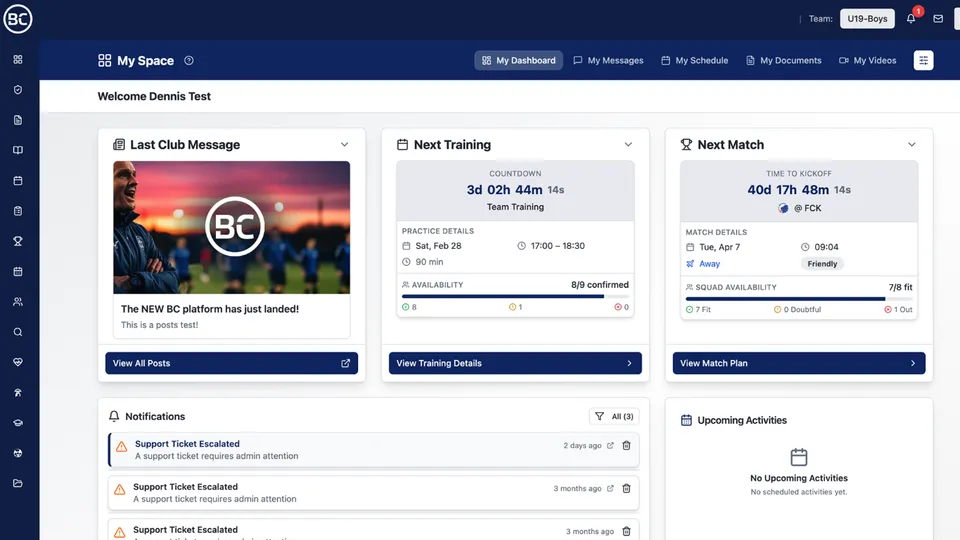
Better Coaching is a multi-tenant, web and mobile platform designed to help football clubs and academies organize, manage, and improve their coaching operations.
The platform brings together coaching methodologies, training planning, session design, player development, video analysis, and communication into a centralized environment.
Instead of relying on disconnected tools, spreadsheets, and documents, clubs can establish a consistent coaching philosophy and give their coaching staff the tools to apply it across teams and age groups.
Better Coaching supports the entire coaching process, from long-term season planning and daily training sessions to individual player evaluations and development tracking.
Who is it built for?
The platform serves football organizations of different sizes, including professional clubs, youth academies, and grassroots football organizations. Its primary users include:
- Club administrators: Manage club structures, teams, coaching staff, and platform access.
- Sporting directors and academy managers: Define coaching methodologies, oversee development programs, and coordinate training across multiple teams.
- Coaches: Plan seasons, create training sessions, design exercises, communicate with players, and evaluate performance.
- Players: Access relevant training information, shared content, feedback, and development-related information.
Each club operates within its own dedicated environment, allowing it to manage its teams, users, and content independently.
Product features
What can users do?
Coaching Methodology & Club Philosophy
Clubs can establish a consistent approach to football development by defining their coaching philosophy, style of play, and training principles.
These guidelines provide a common framework for coaches working across different teams and age groups.
Season & Training Planning
Coaches can organize training activities across different timeframes, from season-long periodization plans to individual training sessions.
They can structure training schedules, reuse existing sessions, and align daily exercises with broader development objectives.
Training Session & Drill Builder
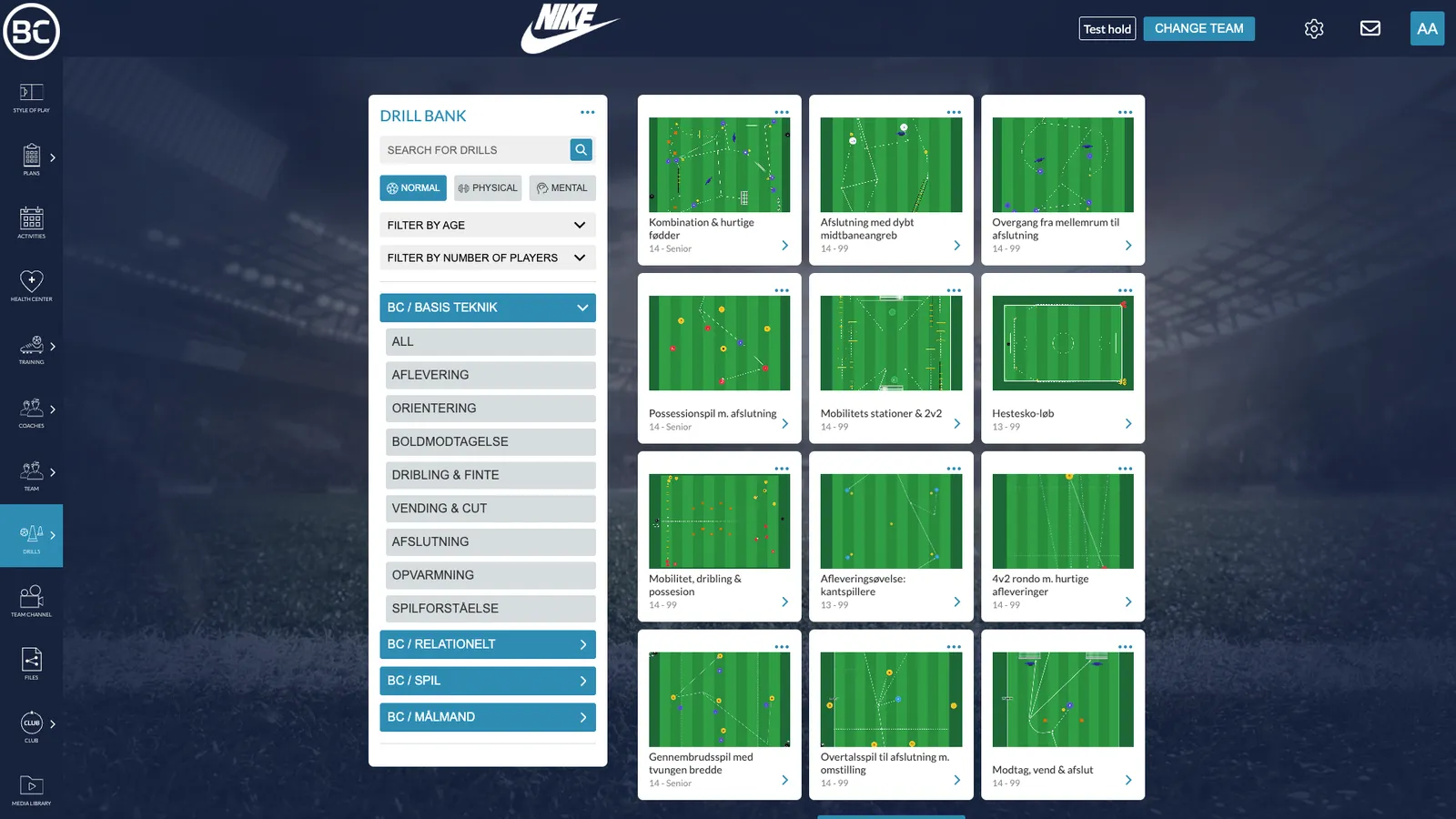
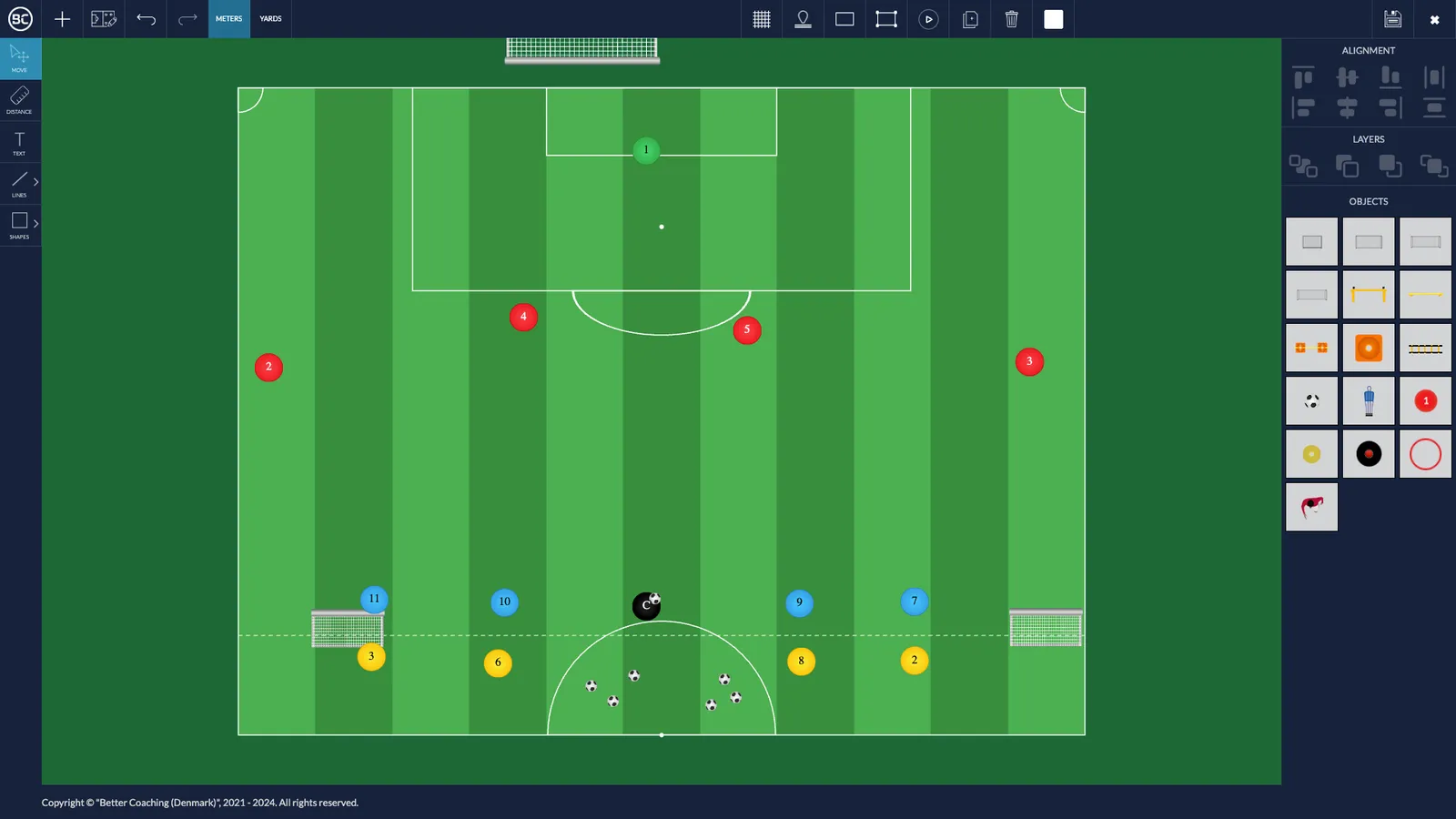
A visual exercise builder enables coaches to design football drills using pitch layouts, players, equipment, drawing tools, and animations.
Exercises can be organized into a shared library, reused in training sessions, and distributed across coaching staff.
Player Development & Evaluation
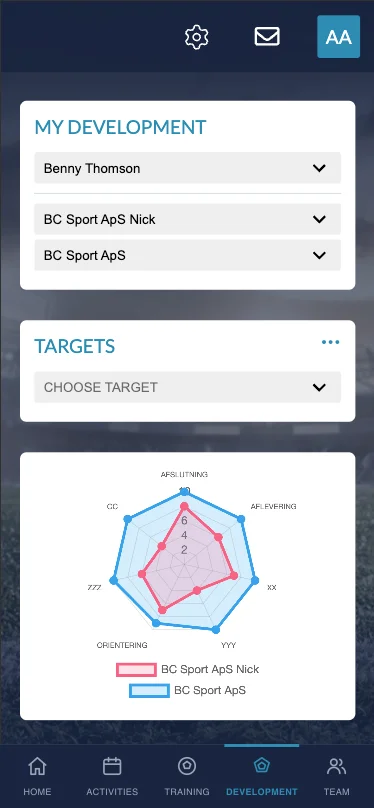
The platform supports individual player development through evaluations, feedback, and development planning.
Coaches can assess players, monitor development objectives, and maintain information about their progress over time.
Video & Media Management
Clubs can organize and share training videos, documents, images, and other educational resources.
A centralized media library makes relevant content accessible to coaches and players while supporting knowledge sharing across the organization.
Team Management & Communication
Better Coaching helps clubs organize teams, players, coaches, training events, and internal communication.
It also supports announcements, notifications, and the sharing of information between relevant members of the organization.
My involvement
My role and contributions
I worked on Better Coaching for more than two years as Lead Full-Stack Engineer, combining hands-on development with technical leadership and architectural decision-making.
I joined a six-person development team responsible for taking over an existing platform, addressing longstanding technical problems, and establishing a more maintainable foundation for continued product development.
My responsibilities included:
- Leading technical decisions and coordinating development across frontend, backend, and mobile applications.
- Rebuilding the legacy PHP frontend using React and gradually replacing legacy PHP APIs with Node.js and Express.
- Redesigning the data architecture and migrating the platform from MongoDB to PostgreSQL.
- Migrating authentication from a custom implementation to Supabase Auth.
- Building an internal administration platform to automate club onboarding and user management.
- Improving deployment infrastructure through Docker, GitHub Actions, and CapRover.
- Introducing automated API integration tests and more reliable development workflows.
- Developing and maintaining product features across the web and mobile applications.
- Performing code reviews, mentoring developers, and collaborating with product stakeholders.
Technology stack
- Frontend
- React, TypeScript, Redux Toolkit, RTK Query
- Mobile
- React Native, Expo
- Backend
- Node.js, Express, REST APIs
- Database
- MongoDB, PostgreSQL
- Authentication
- Supabase Auth
- Infrastructure
- DigitalOcean, Docker, CapRover, GitHub Actions, Cloudflare
- Testing
- Jest, Supertest
Scale & impact
During my involvement, Better Coaching evolved from a difficult-to-maintain legacy application into a more structured and scalable product serving approximately 60 football clubs and 8,000 users.
Key results
- football clubs
- ~60
- users
- ~8,000
- club onboarding, down from ~1 day
- 10–20 min
The modernization also delivered measurable operational improvements:
- Club onboarding: Reduced from approximately one working day to 10–20 minutes.
- Production stability: Fewer urgent fixes and recurring production issues.
- Quality assurance: Reduced regression issues through improved architecture, testing, and release processes.
- Development efficiency: A smaller team could maintain and continue developing the platform more effectively.
These improvements allowed the team to spend less time maintaining legacy infrastructure and more time delivering product functionality.
Case studies
Explore the engineering behind the product
Case studies
7 total
- Replacing a Legacy PHP Backend Module by Module Without Freezing Product DevelopmentMigrating Better Coaching’s entire inherited PHP API to Node.js and Express in about five to six months, one module at a time, while new features kept shipping.
- Migrating Production Data from MongoDB to PostgreSQL with a 2-Hour CutoverRedesigning Better Coaching’s data model and moving ~8,000 users from ~60 per-customer MongoDB databases into one multi-tenant PostgreSQL database, with a final production cutover of about two hours.
- Rebuilding a Legacy Frontend in React Without a Risky RedesignReplacing Better Coaching’s server-rendered PHP/jQuery frontend with a React application in about four to five months, while deliberately keeping the existing user experience stable.
- Migrating ~8,000 Users from Custom Authentication to Supabase AuthReplacing Better Coaching’s custom username/password authentication with Supabase Auth and moving ~8,000 existing users to email-based login in about a month.
- Cutting Customer Onboarding from Most of a Working Day to 10–20 MinutesBuilding an internal admin platform that turned developer-dependent onboarding and routine customer operations into self-service workflows for Better Coaching’s owners.
- Migrating ~80 GiB of Customer Media to CDN-Backed Object StorageMoving Better Coaching’s Media Library off the application server’s filesystem into S3-compatible object storage with CDN delivery, and replacing physical folders with a database-backed virtual hierarchy.
- Replacing Manual SFTP Releases with a Test-Gated CI/CD PipelineMoving Better Coaching from manual SFTP deployments to a containerized pipeline with integration tests, isolated environments and test-gated production releases.