Loni.ai
A unified network management and automation platform for enterprise IT infrastructure.
- Network & IT Infrastructure Automation
- Web & Mobile
- ~2 years
- Role
- Lead Front-End Developer
- Website
- loni.ai(opens in a new tab)
On this page
About the product
What is Loni.ai?
LONI (Logical Objective Network Intelligence) is an enterprise network management and automation platform designed to help organizations monitor, manage, and automate their network, security, and cloud infrastructure from a centralized environment.
Modern IT organizations often rely on infrastructure from multiple vendors, each with its own management interfaces, configuration tools, monitoring systems, and operational processes. This fragmentation makes troubleshooting, infrastructure management, and routine operations increasingly complex.
LONI addresses these challenges by providing a unified interface that connects different infrastructure systems through a vendor-agnostic architecture.
The platform combines real-time infrastructure visibility, network automation, incident management, and operational workflows, allowing engineers to monitor systems, investigate problems, and execute actions without constantly switching between different tools.
Its ZeroCode Automation capabilities enable infrastructure engineers to perform complex operations and automate repetitive tasks without writing scripts or manually interacting with individual devices.
Through dedicated web and mobile applications, LONI extends these capabilities beyond traditional network operation centers, allowing engineers to monitor and manage infrastructure remotely.
Who is it built for?
LONI is designed for organizations operating complex IT environments, from smaller infrastructure teams to large enterprises managing multiple networks, data centers, and cloud services. Its primary users include:
- Network Engineers: Monitor and configure network devices, troubleshoot connectivity issues, manage routing and switching, and automate repetitive operational tasks.
- Network Operations Center (NOC) Teams: Monitor infrastructure health, respond to alerts, investigate incidents, and coordinate problem resolution.
- Security Engineers & SOC Teams: Monitor security infrastructure, investigate threats, manage firewall policies, and execute security-related actions.
- Cloud & Infrastructure Engineers: Manage and monitor infrastructure across on-premises systems, private clouds, and public cloud environments.
- IT Managers & Infrastructure Directors: Gain centralized visibility into infrastructure operations, team activities, incidents, and operational efficiency.
The platform supports organizations using equipment and services from different vendors without requiring them to replace their existing infrastructure.
Product features
What can users do?
Unified Network & Infrastructure Management
LONI provides centralized visibility and management across network, security, cloud, and IT infrastructure.
Instead of accessing separate systems for routers, switches, firewalls, servers, and cloud resources, engineers can work through a unified management interface.
The platform aggregates operational information such as device status, configurations, logs, alerts, and infrastructure relationships, making it easier to investigate issues and manage complex environments.
ZeroCode Network Automation
One of LONI’s core capabilities is enabling infrastructure automation without requiring engineers to write code.
Through predefined workflows, configuration templates, and graphical interfaces, users can automate common operations such as:
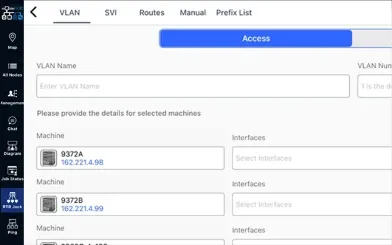
- Creating and modifying network VLANs.
- Managing routing and switching configurations.
- Updating firewall policies.
- Deploying configuration changes across multiple devices.
- Automating configuration backups and restoration.
- Performing infrastructure compliance checks.
The platform handles the underlying device-specific commands, APIs, and automation logic, allowing engineers to focus on the intended operational outcome rather than implementation details.
Interactive Network Visualization
LONI provides visual representations of network infrastructure, allowing engineers to explore devices, their connections, and operational states.
Infrastructure topology views help users understand relationships between connected systems and identify relevant components when investigating incidents.
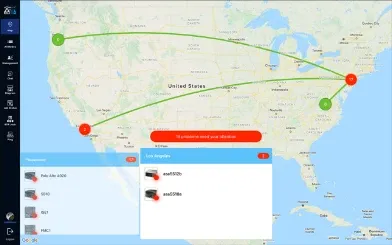
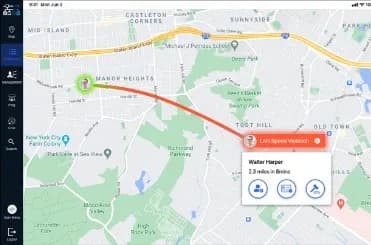
Geographical map-based interfaces can display distributed infrastructure locations, connected devices, and their operational information.
These visualizations make complex infrastructure environments easier to understand and navigate.
Real-Time Monitoring & Incident Management
The platform collects and correlates operational information from connected infrastructure to provide engineers with actionable insights.
Instead of relying solely on large volumes of logs and isolated alerts, LONI brings relevant information together to support incident investigation and troubleshooting.
Engineers can examine device status, investigate network problems, review diagnostic information, and execute corrective actions through the same platform.
Mobile Network Operations
LONI extends network operations and infrastructure management to mobile devices.
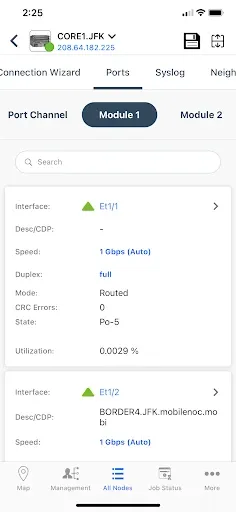
Through its MobileNOC and related mobile capabilities, engineers can monitor infrastructure, respond to incidents, and execute supported administrative actions remotely.
This includes reviewing alerts, examining infrastructure status, accessing diagnostic information, and performing network configuration tasks.
The goal is to allow engineers to act on infrastructure problems without needing to be physically present at a workstation or network operations center.
Unified Ticketing & Collaboration
The platform brings infrastructure-related incidents, operational events, and support workflows into a centralized environment.
It supports integration with internal ticketing systems, service providers, and hardware vendors.
Engineers can use shared incident information to coordinate troubleshooting, manage operational requests, and follow the progress of infrastructure issues across teams.
Network Configuration & Compliance
LONI provides capabilities for managing configuration changes across different network devices and vendors.
Engineers can review configurations, apply standardized changes, maintain backups, and restore configurations when necessary.
By automating repetitive configuration and compliance activities, the platform helps reduce manual operational work and the risk of configuration errors.
Automated Network Assistant
LONI includes an Automated Network Assistant (ANA), designed to simplify interactions with network infrastructure through a conversational interface.
The assistant allows users to interact with supported infrastructure operations using predefined commands and natural-language-oriented interactions.
This provides an alternative to navigating multiple administrative interfaces or manually executing network commands.
My involvement
My role and contributions
I worked on LONI for approximately two years as a Lead Front-End Developer, contributing to the development of its web and mobile applications and participating in architectural and technical decisions.
My responsibilities included:
- Leading frontend development using React, React Native, and TypeScript.
- Contributing to frontend architecture, component design, and application structure.
- Developing complex user interfaces for network management, infrastructure visualization, and operational workflows.
- Building interactive map-based interfaces to display infrastructure devices, their locations, and network connections.
- Implementing real-time data updates and integrating WebSocket-based communication.
- Developing interfaces for displaying device information, operational status, and network-related events.
- Building an interactive, rule-based chat interface for communicating with infrastructure services.
- Collaborating with backend developers on API contracts, data structures, and feature implementation.
- Working with Node.js application services and integrations with Python-based infrastructure services.
- Introducing Redux Toolkit and RTK Query to improve state management, data fetching, and caching.
- Participating in code reviews, supporting other developers, and helping establish maintainable development patterns.
- Collaborating with product stakeholders to translate complex infrastructure requirements into functional user interfaces.
One of the most interesting aspects of the project was translating complex networking concepts and operational workflows into interfaces that engineers could use efficiently.
The application required handling real-time information, complex data relationships, and interactions with multiple backend services while keeping the user experience understandable and responsive.
Technology stack
- Web
- React, TypeScript
- Mobile
- React Native
- State Management
- Redux Toolkit, RTK Query
- Real-Time Communication
- WebSockets
- Backend Integration
- Node.js, Python services, REST APIs
- Visualization
- Google Maps API, interactive network visualization
- Architecture
- API-driven applications, real-time updates, distributed backend services
Scale & impact
LONI is an enterprise infrastructure platform designed to bring network operations, automation, and management into a centralized environment. Its core value is reducing the complexity of working with different infrastructure vendors, management systems, and operational processes.
Notable platform capabilities include:
- Centralized infrastructure management: Unified access to network, security, and cloud systems.
- Vendor-agnostic operations: Management of infrastructure from multiple hardware and software providers.
- ZeroCode automation: Execution of complex operational tasks without requiring engineers to write scripts.
- Real-time infrastructure visibility: Access to operational information, device status, and infrastructure relationships.
- Remote infrastructure management: Network operations available through web and mobile applications.
- Integrated incident workflows: Centralized troubleshooting, ticketing, and coordination between infrastructure teams.
My contributions focused on improving the applications through which engineers accessed these capabilities, including interactive infrastructure visualization, real-time interfaces, API integration, and frontend architecture.