Next11
Real-time sports performance tracking powered by wearable sensors, connected hardware, and mobile applications.
- Sports Tech
- Mobile & Tablet
- ~2 years (2022–2024)
- Role
- Lead Full-Stack Developer
On this page
About the product
What is Next11?
Next11 is a Copenhagen-based sports technology company developing accessible performance tracking solutions for football and ice hockey teams.
The platform combines lightweight wearable sensors, a portable Edge computing device, and dedicated applications for coaches and players to capture, process, and analyze physical performance during training sessions and matches.
Unlike traditional GPS-based tracking systems, Next11 uses accelerometer sensors worn on players’ calves to measure leg movements and physical workload. This approach captures high-intensity actions such as accelerations, decelerations, sprints, and jumps, including movements that may be underrepresented by upper-body tracking devices.
The system supports live tracking of up to 25 players simultaneously, giving coaches immediate access to performance information while providing athletes with detailed insights into their individual progress.
By making sports performance analytics more affordable and easier to use, Next11 enables clubs and academies to make data-informed decisions about training intensity, workload management, and long-term player development.
Who is it built for?
Next11 is designed for sports organizations looking to integrate objective performance data into their training and development processes. Its primary users include:
- Coaches: Monitor physical performance during matches and training, compare individual and team workloads, and adjust training intensity.
- Strength & Conditioning Coaches: Analyze player workload, track intensity trends, and support physical preparation and recovery planning.
- Players: Access individual performance statistics, review training history, track development, and compare their results with team averages.
- Club & Academy Managers: Monitor development across teams, evaluate performance trends, and support longer-term player development programs.
The system is designed to be portable and easy to operate directly on the training field, making performance tracking accessible to organizations with varying levels of technical expertise.
How it works
How does the system work?
Next11 combines dedicated tracking hardware with cloud-connected software applications.
Wearable Sensors
Each player wears a lightweight, 20-gram accelerometer sensor on their calf, secured inside a breathable sleeve.
The sensors capture leg movements and physical activity during matches and training sessions.
Bluetooth Mesh Network
The sensors communicate wirelessly through a Bluetooth 5.0 Mesh Network, supporting simultaneous tracking of up to 25 players.
The system is designed to cover a full-sized football pitch and operate in both indoor and outdoor environments.
Edge Computing Device
A portable Edge device positioned near the field receives tracking information from the sensors.
It processes and stores incoming data using dedicated algorithms, transforming raw movement measurements into meaningful performance indicators.
Coach Tablet Application
The Edge device sends processed information to the coach’s tablet over a local Wi-Fi connection.
Coaches can monitor physical workloads and intensity during training sessions and matches without depending on a continuous internet connection.
Cloud Synchronization & Player Application
Session information is synchronized with cloud services when internet connectivity becomes available.
Coaches and players can then review historical sessions, explore detailed analytics, and track individual development over time.
Product features
What can users do?
Real-Time Player Tracking
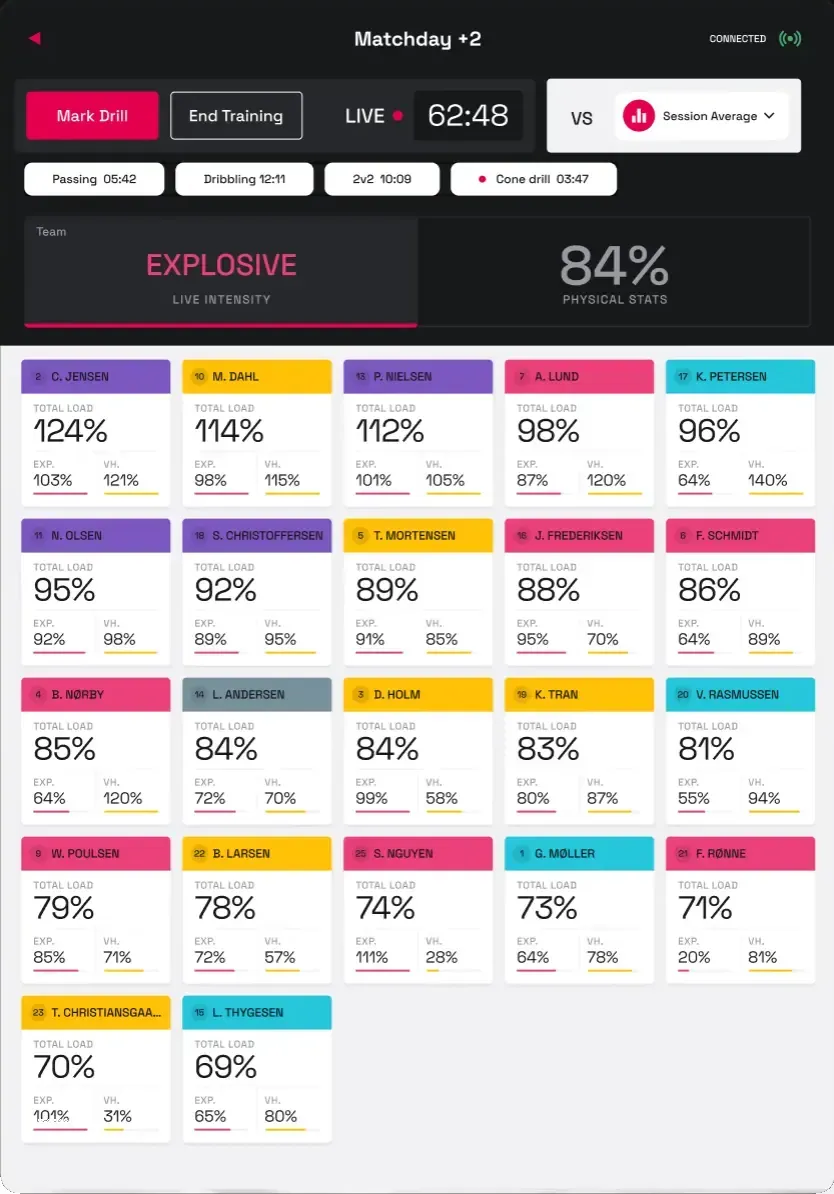
Next11 allows coaches to monitor up to 25 athletes simultaneously during training sessions and matches.
Through the coach tablet application, users can access live performance indicators and observe how individual players and the team as a whole are responding to physical activity.
This enables coaches to make more informed decisions about training workloads and player participation.
Player Load & Intensity Analysis
At the center of Next11’s analytics is its Player Load metric, which represents the accumulated physical load experienced by an athlete.
Using accelerometer measurements from players’ legs, the system captures physical effort associated with movements such as sprinting, accelerating, decelerating, jumping, and changing direction.
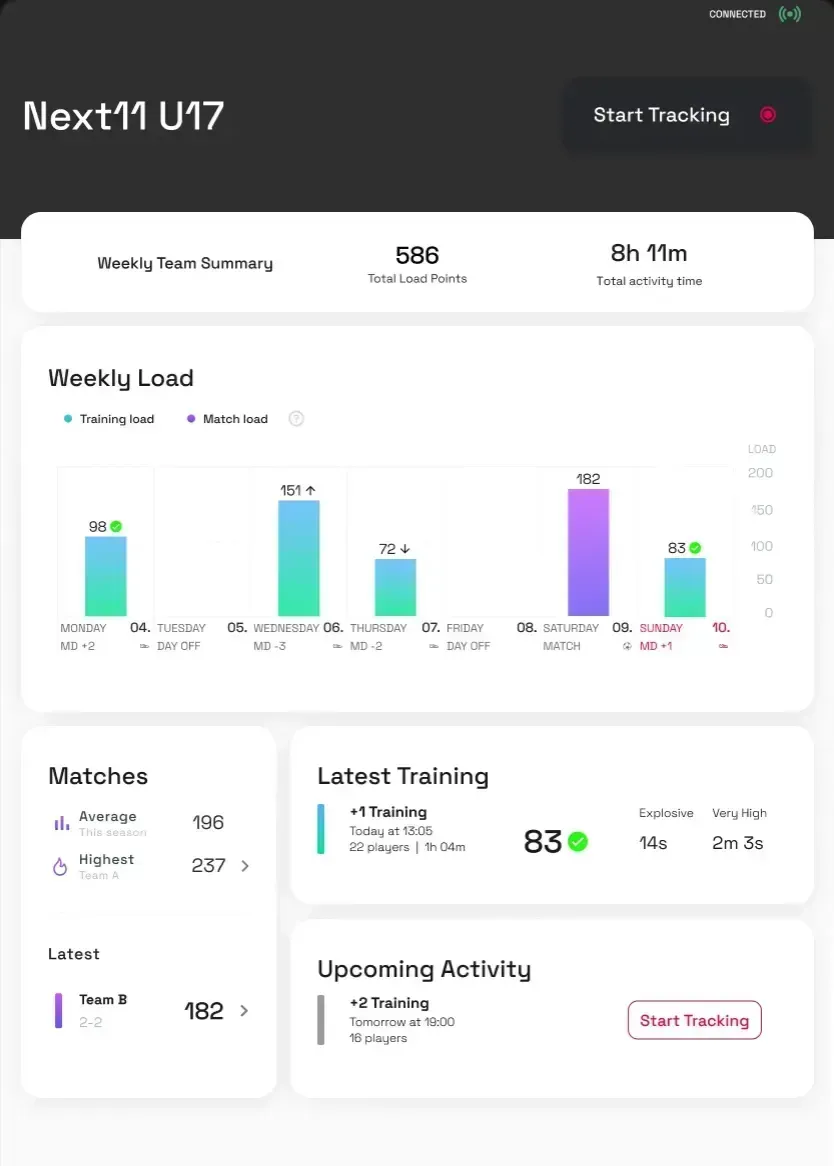
Performance data is organized into intensity indicators and visualizations, helping coaches understand both individual and team workloads.
Training & Match Analytics
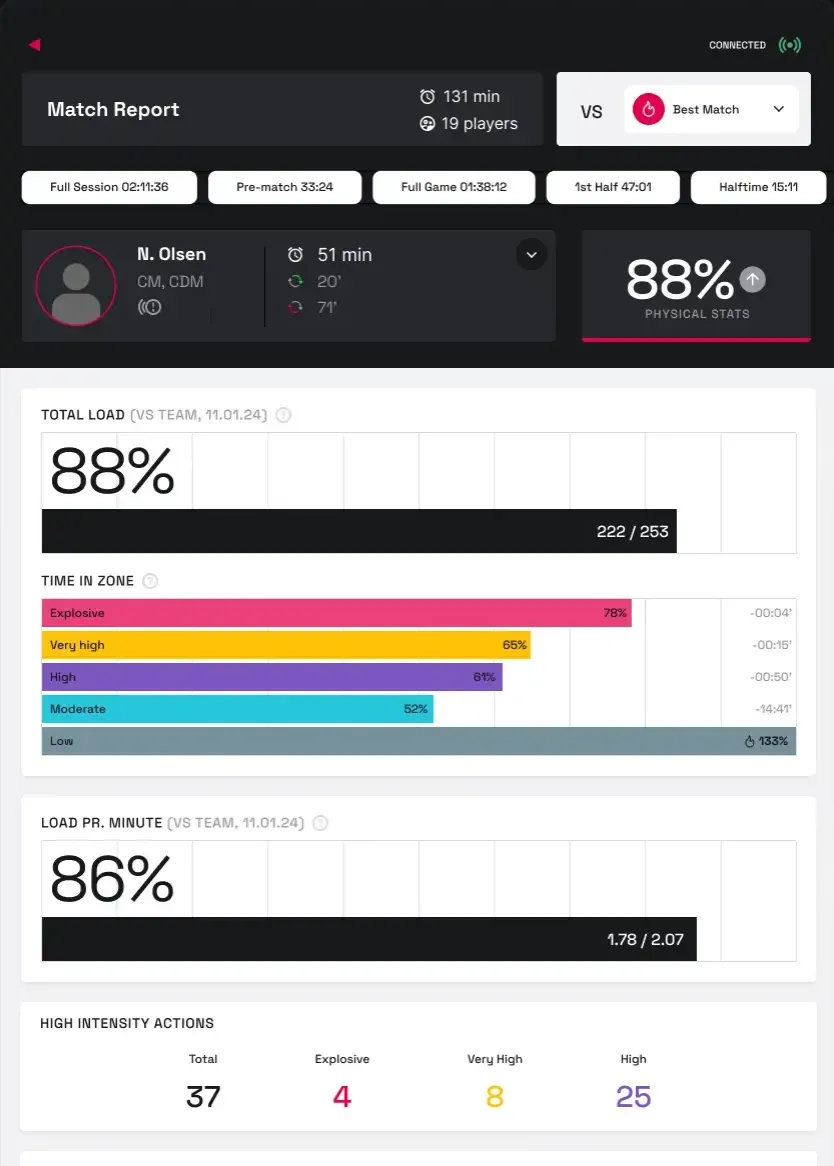
Coaches can review performance information across individual training sessions and competitive matches.
Interactive charts and visual indicators make it easier to identify changes in workload, compare sessions, and analyze physical performance trends.
Historical statistics provide additional context for understanding player development and evaluating training effectiveness.
Workload Management & Player Development
The platform supports workload monitoring over longer periods, helping coaching staff understand how training intensity changes throughout a season.
Features such as accumulated Player Load, intensity distribution, and Acute:Chronic Workload Ratio provide additional insights into workload consistency.
These indicators can support decisions about training intensity, physical preparation, and injury-risk management.
Offline-First Training Sessions
The coach tablet application communicates directly with the Edge device through a local Wi-Fi connection.
Because this connection may not provide internet access, the application supports collecting and storing training session information locally.
Firebase offline persistence allows session data to remain available during disconnected operation and synchronize automatically when an internet connection becomes available.
This enables reliable data collection even at training grounds with limited connectivity.
Individual Player Application
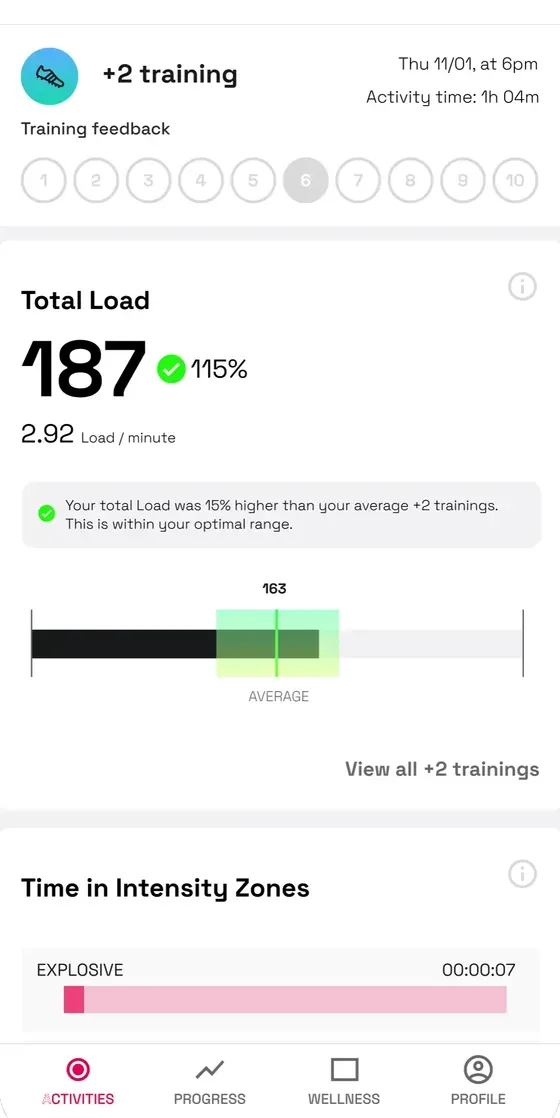
Next11 provides a dedicated mobile application that gives players direct access to their performance data. Players can:
- Review their individual performance from training sessions and matches.
- Explore historical activity through interactive charts and session logs.
- Compare recent performance with previous sessions and personal benchmarks.
- View team performance comparisons.
- Monitor accumulated workloads and development trends.
- Record subjective wellness information, including fatigue, muscle soreness, and sleep.
The application encourages players to take a more active role in understanding their physical development.
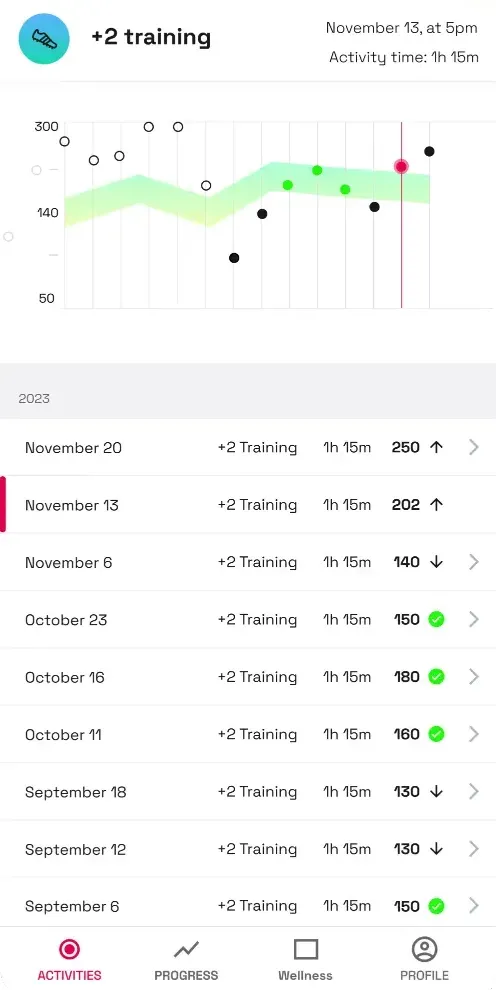
Performance Visualization & Training History
Performance information is presented through interactive graphs, charts, and calendar-based interfaces.
Users can navigate between sessions, examine historical data, and compare physical activity across different periods.
These visualizations transform complex tracking information into insights that coaches and players can interpret without requiring advanced data-analysis knowledge.
My involvement
My role and contributions
I worked on Next11 for approximately two years as a Full-Stack Developer, contributing to the development of the coach and player applications, backend services, and integration between the platform’s hardware and software components.
My responsibilities included:
- Developing the coach-facing tablet application using React Native and TypeScript.
- Integrating the tablet application with the Edge device to receive and display live tracking information.
- Implementing offline-first data collection and synchronization workflows using Firebase and Firestore.
- Developing the player-facing mobile application, including performance dashboards, interactive charts, and training history.
- Building and maintaining Node.js and Express backend APIs for managing users, teams, player profiles, and training sessions.
- Working with PostgreSQL and Sequelize for application data management.
- Integrating Firebase Authentication and push notifications.
- Collaborating with hardware and data teams to integrate sensor-generated information into the applications.
- Investigating and resolving issues identified during real-world training sessions and hardware testing.
The project required working across mobile development, backend services, cloud infrastructure, hardware communication, and data visualization.
A particularly interesting engineering challenge was designing a reliable offline-first experience while supporting real-time communication with external hardware.
Technology stack
- Mobile
- React Native, TypeScript
- Backend
- Node.js, Express, REST APIs
- Database
- PostgreSQL, Firebase Firestore
- Authentication
- Firebase Authentication
- Notifications
- Firebase Cloud Messaging
- Hardware Integration
- BLE sensors, Bluetooth Mesh, Edge device, local Wi-Fi
- Architecture
- Offline-first, real-time tracking, cloud synchronization
Scale & impact
Next11 brings together hardware, software, and sports science to make performance tracking more accessible to football and hockey organizations. During my involvement, the platform served approximately 40 clubs.
Key results
- clubs
- ~40
- players tracked simultaneously
- 25
- sessions recorded without internet
- Offline-first
Notable capabilities and technical outcomes included:
- 25 players tracked simultaneously: Live data collection from multiple wearable sensors during training sessions and matches.
- Real-time performance visibility: Coaches could monitor physical workload and training intensity directly from a tablet.
- Reliable offline functionality: Training sessions could be recorded without requiring an active internet connection.
- Automated cloud synchronization: Session information could be uploaded when connectivity returned.
- Individual performance access: Players could review historical activities, monitor development, and compare results.
- Connected hardware ecosystem: Sensors, Edge devices, mobile applications, and backend services operated as part of a unified product.
The platform made it possible for coaches to incorporate objective workload information into everyday training workflows while giving players greater visibility into their physical performance.